

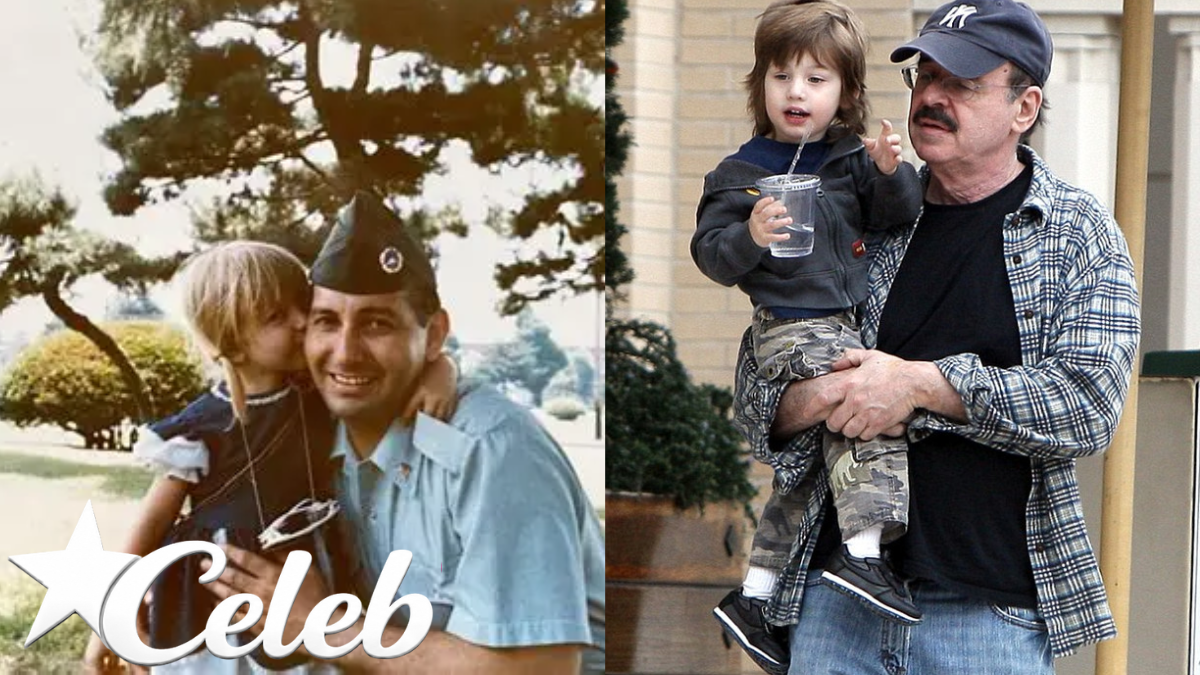
Discover the complete, in-depth guide to Fausto Xavier Aguilera, his military career in the United States, his complex relationship with daughter Christina Aguilera, and how his legacy shaped her iconic music, family, and healing journey.
Introduction: Why the Story of Fausto Xavier Aguilera Matters
When we look at the dazzling heights of pop superstardom, we often see only the finished product: the soaring vocals, the sold-out stadiums, and the flawless red-carpet appearances. However, the art that moves us most deeply is almost always forged in the fires of personal struggle.
The story of Fausto Xavier Aguilera is not just a footnote in pop music history; it is the silent, complex foundation upon which one of the greatest vocalists of our generation built her emotional landscape. As the biological father of global icon Christina Aguilera, Fausto’s presence—and subsequent absence—deeply influenced her life, her art, and her personal journey toward healing.
Understanding who Fausto was, the reality of his life as an Ecuadorian immigrant serving in the United States military, and the volatile household he commanded provides invaluable context for fans and cultural critics alike. This guide explores his life, his career, the profound trauma his family experienced, and how his daughters navigated the shadow of his legacy to break cycles of abuse and establish their own paths.
Who is Fausto Xavier Aguilera? His Early Life and Military Career

To understand the man who would shape so much of his children’s lives, one must look at his origins and the environments that shaped his worldview.
Ecuadorian Roots and Immigration
Fausto Wagner Xavier Aguilera-Monge was born on November 4, 1949, in the coastal city of Guayaquil, Ecuador. He was born into a family with deep ties to discipline and national service; his father, Fausto Romeo Aguilera Calderon, was a distinguished Captain in the Ecuadorian Navy who eventually immigrated to the United States and worked as a maritime consultant on Staten Island. Following in his father’s footsteps of rigid structure, young Fausto also sought a life of military service, eventually immigrating to the United States.
Service in the United States Army
Upon arriving in the U.S., Fausto enlisted in the United States Army, eventually rising to the rank of Sergeant. His career in the military was defined by high expectations, strict discipline, and constant relocation. For a sergeant in the army, control and order are paramount, traits that unfortunately did not remain confined to his professional life but spilled heavily into his domestic environment.
The Family Dynamic: Shelly Loraine Fidler and the Relocation Years
In 1980, Fausto married Shelly Loraine Fidler, an artistic young woman who was a violinist in the American Youth Symphony and later worked as a Spanish translator.
| Aspect | Fausto Xavier Aguilera | Shelly Loraine Fidler |
| Background | Ecuadorian Immigrant, Guayaquil | American of German, Irish, Welsh, Dutch descent |
| Profession | Sergeant, United States Army | Violinist, Spanish Translator |
| Personality | Highly disciplined, rigid, controlling | Expressive, artistic, musical |
The collision of these two vastly different worlds—the regimented military sergeant and the expressive, artistic musician—created a highly volatile domestic chemistry. Because of Fausto’s active military service, the family was forced to relocate constantly.
- Staten Island, New York: Where their eldest daughter, Christina, was born on December 18, 1980.
- New Jersey & Texas: Brief postings that kept the young family constantly packing and unpacking.
- Sagamihara, Japan: In 1983, they moved to Japan, where they lived for at least two years.
- Newfoundland, Canada: Postings at military bases like Earnest Harmon Air Force Base.
This rootless existence, combined with Fausto’s increasingly controlling and volatile behavior, meant that his children grew up in an environment where the physical walls were constantly changing, but the underlying tension remained terrifyingly constant.
The Impact on the Siblings: Rachel Aguilera and Growing Up in an Unstable Household
The weight of an abusive household is rarely carried by one child alone. While Christina became the public voice of this shared trauma, her younger sister was right there beside her, enduring the same unstable environment.
The Birth of Rachel Aguilera
In 1986, after the family returned from Japan and settled back in the United States, they welcomed their second daughter, Rachel Aguilera. Born into the final, most chaotic years of her parents’ marriage, Rachel’s early childhood was marked by the intense anxiety of domestic discord.
                    Fausto Xavier Aguilera  ===  Shelly Loraine Fidler
                                            |
                                   +--------+--------+
                                   |                 |
                           Christina Aguilera   Rachel Aguilera
                             (Born 1980)       (Born 1986)
The Bond of the Christina Aguilera Siblings
When talking about the Christina Aguilera siblings, Rachel is the one with whom she shares the deepest, most foundational bond. The sisters relied heavily on one another for emotional survival. While their mother, Shelly, did her best to protect them, both girls witnessed and experienced severe emotional and physical outbursts from their father. This shared childhood trauma forged a lifelong protective instinct in Christina toward Rachel. Years later, when their mother remarried James Kearns, they welcomed a half-brother, Michael Kearns, but it was the shared crucible of their early years with Fausto that permanently bound Christina and Rachel.
The Turning Point: The 1987 Escape and Relocation to Pennsylvania
By 1987, the domestic situation had reached a breaking point. Shelly Loraine Fidler made the courageous decision to take her two young daughters and flee the marriage.
“Growing up I did not feel safe. Feeling powerless is the worst feeling in the world. I turned to singing as an outlet. The pain at home is where my love for music came from.” — Christina Aguilera
Seeking Refuge in Wexford
Shelly packed up what she could and moved her daughters to her mother’s home in Wexford, Pennsylvania, a quiet suburb of Pittsburgh. The transition from the rigid, high-alert lifestyle of military housing to a peaceful suburban neighborhood was a massive relief, but the emotional scars did not vanish overnight.
The Escape from Bullying and Internalizing the Pain
In Pennsylvania, Christina’s immense musical talent began to shine, earning her local fame as “the little girl with the big voice”. However, the trauma of her early years made her an easy target for local bullies who were jealous of her talent, eventually forcing her mother to homeschool her. Throughout this time, her father, Fausto Xavier Aguilera, remained entirely estranged, leaving a void that Christina would eventually fill with music.
Christina Aguilera 2000: Rising to Superstardom Under the Shadow of the Past
As the millennium turned, the world was introduced to a vocal powerhouse. The era of Christina Aguilera 2000 was one of unmatched commercial success, cultural dominance, and intense personal contradiction.

The Paradox of Mi Reflejo
In the year Christina Aguilera 2000 took the world by storm, she won the Grammy for Best New Artist and made the bold artistic decision to release Mi Reflejo, a Spanish-language album that celebrated her Ecuadorian heritage.
This created a profound psychological paradox:
- Paternal Connection: She was singing in the native tongue of her father, Fausto Xavier Aguilera, embracing the cultural roots he gave her.
- Complete Estrangement: She was doing so while completely estranged from him, having cut off contact in 1999.
- Public Speculation: The media extensively questioned her identity and her connection to her Latin roots, forcing her to repeatedly address her family history.
During this period, she had to compartmentalize the pain of her childhood to deliver some of the most technically demanding vocal performances in pop history, proving that her roots were hers to claim, with or without her father’s blessing.
The Artistic Legacy: How Fausto Xavier Aguilera Shaped Hits Like “I’m OK” and “Oh Mother”
Rather than burying her trauma, Christina used her pain as raw material for her art, writing songs that directly addressed her childhood and her father’s actions.
“I’m OK” (from Stripped, 2002)
This track is perhaps one of the most raw and devastating songs ever recorded by a mainstream pop artist. It pulls back the curtain on the physical and emotional abuse she witnessed and experienced:
“Bruises fade, father, but the pain remains the same
and I still remember how you kept me so afraid…
I hope you’re feeling happy now, ’cause I’m not hurt no more”
The song details specific, heartbreaking memories of hiding under the covers while domestic violence occurred in the next room, directly pointing to her father’s volatile temper.
“Oh Mother” (from Back to Basics, 2006)
While “I’m OK” was an indictment of her father’s actions, “Oh Mother” was an anthem of gratitude to her mother, Shelly, for having the strength to leave. It celebrates the escape from the military sergeant’s grasp and acknowledges that without that brave exit, neither she nor Rachel Aguilera would have had a future.
These songs provided immense comfort to millions of young fans worldwide who were also trapped in abusive homes, transforming her private suffering into a universal symbol of survival.
Navigating Relationships and Marriage: The Search for Stability
The psychological legacy of growing up with an abusive or volatile father often manifests in how survivors navigate their adult relationships. For Christina, finding a secure, loving partnership was a deliberate, hard-fought journey.
The Search for a Safe Harbor
For years, public interest swirled around the identity of the Christina Aguilera husband. In November 2005, she married music marketing executive Jordan Bratman. Having grown up in an unpredictable environment, Christina openly shared that her marriage to Bratman was an attempt to find the stable, traditional family unit she never had. However, as she grew and evolved, she realized the partnership no longer served her growth, and they divorced amicably in 2011.
Since 2010, she has found sustained stability and partnership with her long-term fiancé, Matthew Rutler. By choosing partners who prioritize safety, open communication, and emotional intelligence, she has successfully built the peaceful domestic life that her parents, Fausto and Shelly, were never able to achieve.
Breaking the Cycle: Raising the Christina Aguilera Children in a Safe Environment
Generational trauma stops when a parent makes a conscious choice to raise their children differently. Christina’s role as a mother is perhaps her most proud achievement, directly contrasting with the parenting style of Fausto Xavier Aguilera.
Meet the Christina Aguilera Children
Christina is the proud mother of two children, whom she shields fiercely from the instability she experienced:
- Max Liron Bratman: Born in January 2008 to Christina and her former husband, Jordan Bratman.
- Summer Rain Rutler: Born in August 2014 to Christina and her partner, Matthew Rutler.
A Parenting Philosophy of Love and Safety
Unlike her own childhood, which was characterized by fear and constant moving, the Christina Aguilera children have grown up in a stable, nurturing, and emotionally supportive environment. Christina has spoken openly about ensuring her children always feel heard, respected, and physically safe, effectively breaking the cycle of abuse that she and her sister Rachel Aguilera endured.
The Evolutionary Perspective: Aging, Healing, and the Question of Reconciliation
How we view our parents changes drastically as we age. As her age evolved, Christina’s perspective on her father shifted from intense anger to a nuanced, quiet desire for closure.
Christina Aguilera Age and the Passage of Time
At Christina Aguilera age of 45 in 2026, she has spent decades reflecting on her childhood. In her twenties, her response to her father was understandably defined by anger and boundaries. However, upon reaching her thirties, her tone softened. In 2012, at age 31, she surprised fans by stating that she was open to potentially reconciling with Fausto:
“I’ve talked about how rough things were for me and I’m sure he’s heard it. He can’t be thrilled about it. So maybe one day we can do lunch… I’m 31 years old now. Maybe it’s time.” — Christina Aguilera
Fausto’s Side of the Story
For his part, Fausto has rarely spoken to the press but did offer a brief response to his daughter’s allegations. He admitted that his marriage to Shelly was highly tense and that he was far from a perfect husband, expressing deep regret for ever raising his hand to his wife. However, he maintained that he loved his daughters deeply and denied ever physically abusing them.
Regardless of where the absolute truth lies, the journey of healing from parental trauma is rarely simple or linear. Reconciliation does not require forgetting, nor does boundaries mean a lack of forgiveness.
Practical Examples of Overcoming Family Trauma
For readers navigating their own complex family dynamics or healing from childhood trauma, the story of the Aguilera family offers several profound, real-world lessons on resilience:
- Channeling Pain into Constructive Outlets: Christina used her pain to fuel her music, but this applies to any creative outlet—writing, painting, sports, or career building.
- Setting Hard Boundaries: It is entirely healthy and necessary to step away from family members who compromise your safety or mental peace, just as Shelly and her daughters did.
- Intentional Parenting: Actively identifying the toxic traits of your own upbringing and choosing to do the exact opposite for your children is the ultimate way to break generational curses.
- Professional Therapy: Seeking counseling to process childhood fears, rather than carrying them into your adult marriages and relationships.
Conclusion
The story of Fausto Xavier Aguilera is a stark reminder that our parents are deeply flawed human beings, often carrying their own unresolved battles and generational pressures. While his actions left a trail of pain that deeply affected his family, his legacy also served as the catalyst for some of the most emotionally resonant art of the 21st century.
Through boundary setting, creative expression, and intentional love, Christina and her family successfully turned a legacy of trauma into a masterclass on survival and healing.
